
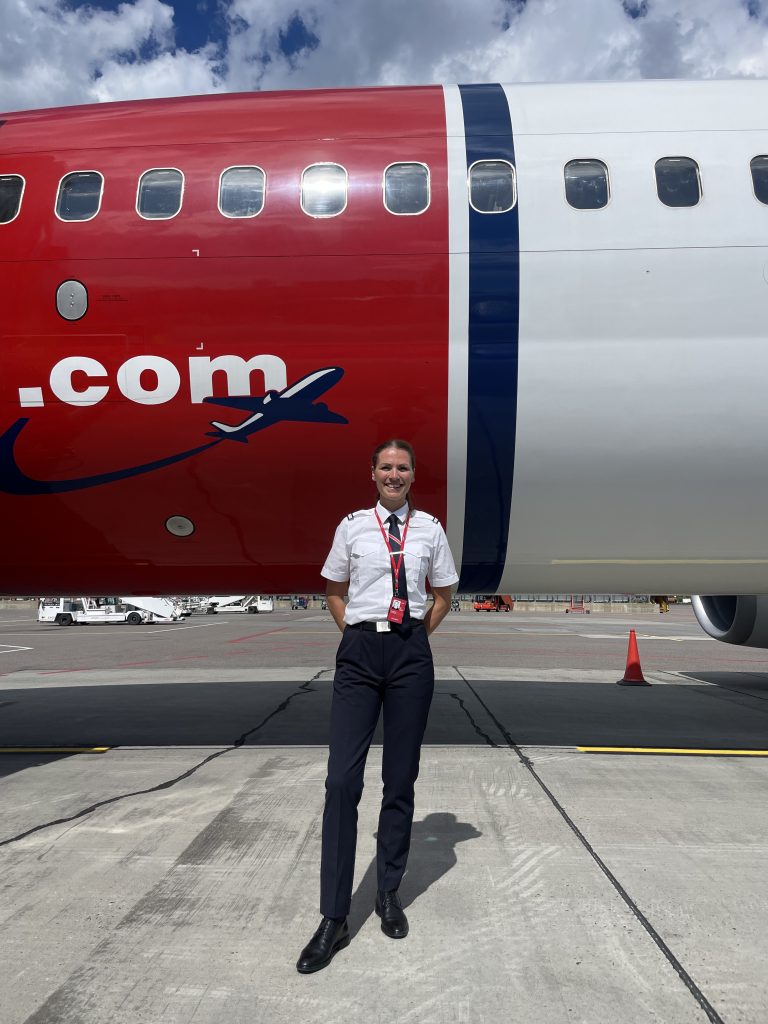
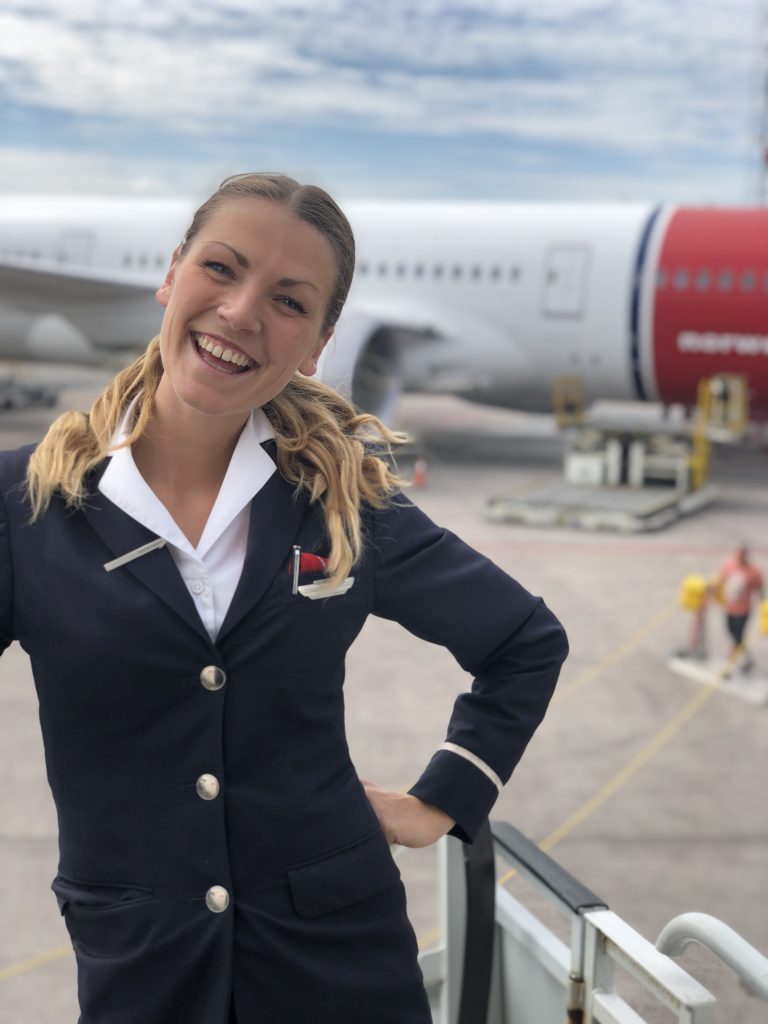
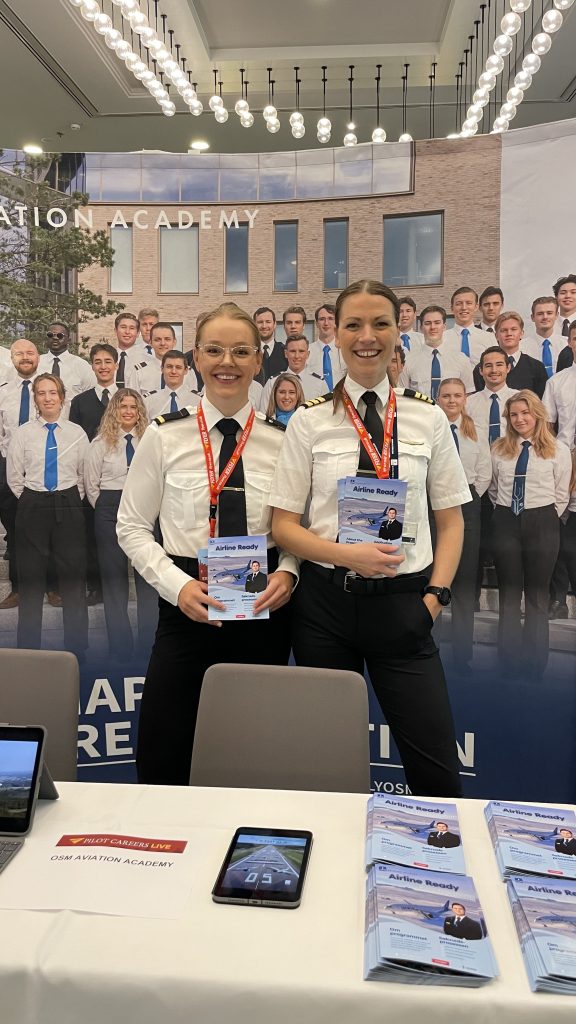
My name is Larisa Kristiansen. I’m 31 years old and today I work as a First Officer at Norwegian, while also working with recruitment at OSM Aviation Academy.
I started flight school at the age of 24. Just a few days after completing my training, I joined OSM Aviation Academy, where I have since worked in both recruitment and as a flight instructor. These experiences eventually brought me back to Norwegian – this time as a pilot.
Here is a little bit about my journey into aviation, what I have learned along the way, and what life looks like as an airline pilot today.
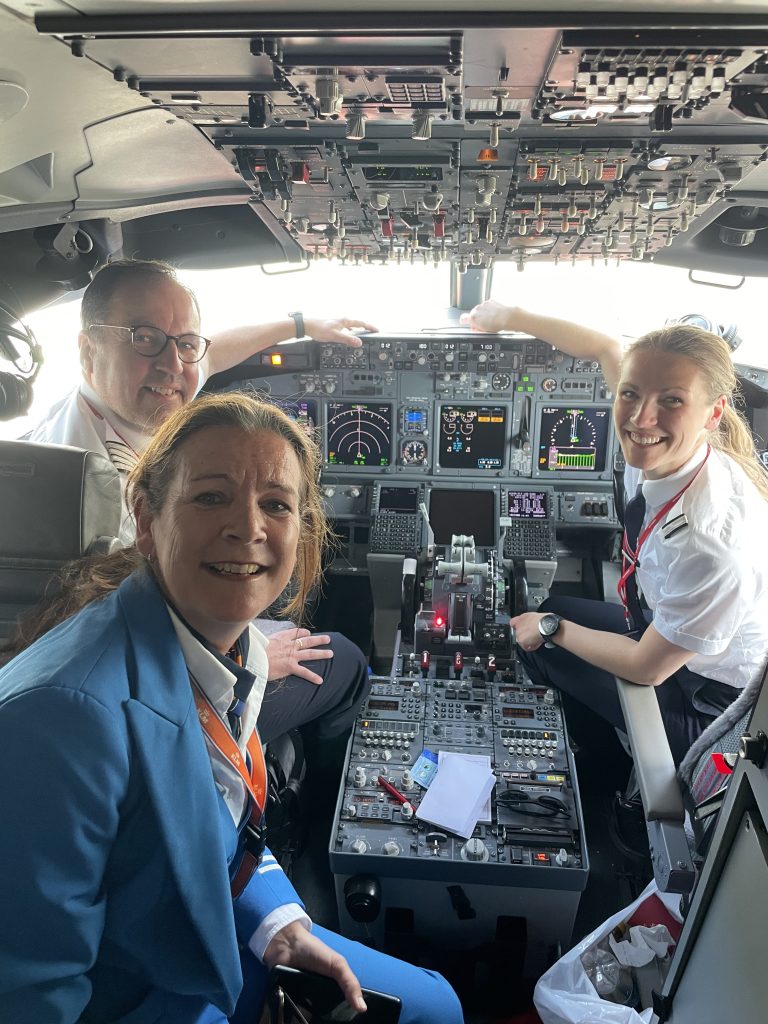
My fascination with aviation started at an early age. My mother worked as a cabin crew member for KLM, so growing up, I had the opportunity to travel a lot and spend time in the cockpit. I loved the atmosphere at airports, the dynamic environment on board and the feeling that the world suddenly seemed a little smaller.
At the same time, I was heavily involved in competitive sports throughout my childhood and teenage years. My main goal was to become the best athlete I could be, but I never completely let go of the dream of becoming a pilot.
Whenever I travelled by air, I would ask if I could visit the cockpit. My fascination only grew stronger. Then, one day, a good friend took me flying in a small aircraft. From that moment on, I couldn’t stop thinking about having a life in the air.
At 22, I decided to put my cycling career on hold and focus on becoming a pilot. I first completed a bachelor’s degree I had already started and then spent a year working and saving money for flight school. After all, pilot training is a significant investment.
Then I came across a job advertisement for cabin crew at Norwegian. It seemed like the perfect opportunity to get to know the industry from the inside. I spoke to pilots, asked about the choices they had made and collected as much advice as I could.
Little did I know that this experience would eventually bring me back to Norwegian as a pilot.
At 24, I started flight school – and I haven’t regretted that decision for a single day.
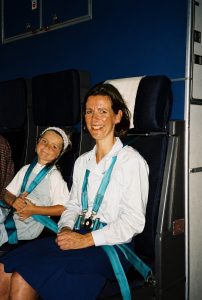
My fascination with aviation started at an early age. My mother worked as a cabin crew member for KLM, so growing up, I had the opportunity to travel a lot and spend time in the cockpit. I loved the atmosphere at airports, the dynamic environment on board and the feeling that the world suddenly seemed a little smaller.
At the same time, I was heavily involved in competitive sports throughout my childhood and teenage years. My main goal was to become the best athlete I could be, but I never completely let go of the dream of becoming a pilot.
Whenever I travelled by air, I would ask if I could visit the cockpit. My fascination only grew stronger. Then, one day, a good friend took me flying in a small aircraft. From that moment on, I couldn’t stop thinking about having a life in the air.
At 22, I decided to put my cycling career on hold and focus on becoming a pilot. I first completed a bachelor’s degree I had already started and then spent a year working and saving money for flight school. After all, pilot training is a significant investment.
Then I came across a job advertisement for cabin crew at Norwegian. It seemed like the perfect opportunity to get to know the industry from the inside. I spoke to pilots, asked about the choices they had made and collected as much advice as I could.
Little did I know that this experience would eventually bring me back to Norwegian as a pilot.
At 24, I started flight school – and I haven’t regretted that decision for a single day.
Becoming a pilot requires discipline, responsibility and excellent preparation. These qualities are just as important throughout your career as they are during flight school.
You are responsible for showing up prepared for your theory lessons, flight lessons and, eventually, your working days as a pilot.
I remember sitting in the aircraft before a flight lesson and often feeling like I had already flown the lesson several times. In a way, I had – because I had mentally gone through the entire flight at home as part of my preparation.
Testing and examinations are also a natural part of both flight training and the airline career. As pilots, we regularly train and are assessed on emergency procedures and different scenarios in the simulator, while an examiner also joins us in the cockpit at least once a year to ensure that normal procedures are performed correctly.
It may sound demanding, but you learn how to handle the pressure.
One of the most important lessons I took away from flight school is that you are never truly finished learning. Good preparation, discipline and the right attitude remain just as important after years in the cockpit as they are on your very first day.
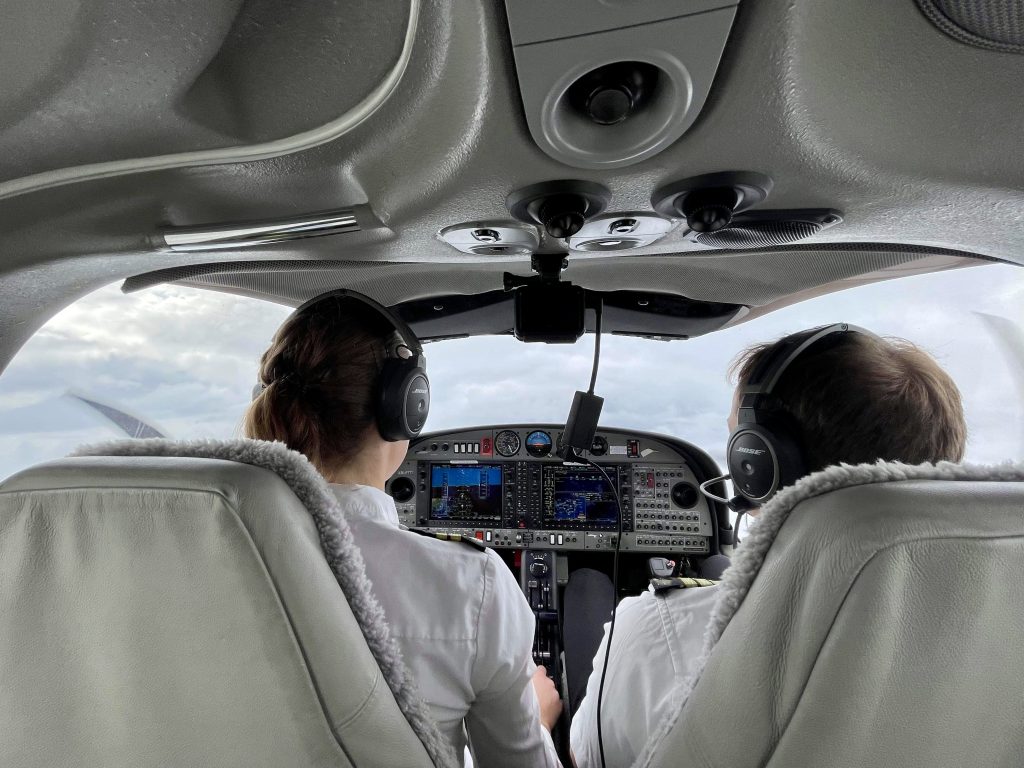
Immediately after completing flight school, I started working at OSM Aviation Academy, first in student recruitment and later as a flight instructor.
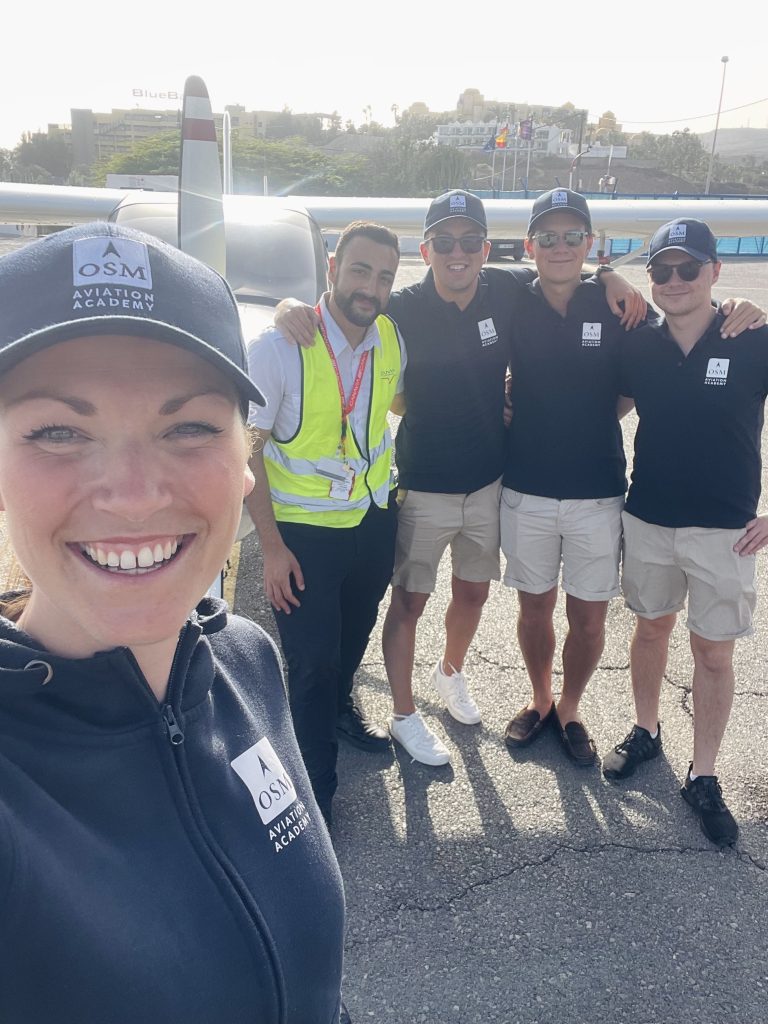
Going from being a student to teaching others was an incredibly valuable experience. Suddenly, I was expected to teach others everything I had spent two years learning myself.
As an instructor, I worked with students who were at the very beginning of their training. It was a fantastic experience to be part of their first experiences in the air and see the excitement as things started to come together.
Teaching something as practical as flying also forces you to think carefully about how you communicate and explain concepts. Students ask all kinds of questions, and I found myself learning just as much from them as they learned from me.
I would highly recommend a flight instructor role to anyone starting their career after flight school. It allows you to strengthen your theoretical knowledge, decision-making, sense of responsibility and confidence in the cockpit – all valuable skills for your future career.
OSM Aviation Academy has a close partnership with Norwegian, and the airline regularly visits Arendal to select students and instructors.
This is how I got the opportunity to attend the Norwegian pilot selection process. The assessment took place at Gullknapp Airport in Arendal and included a personal interview, a group exercise and simulator flying. We were assessed on flying skills, how we handled different challenges and how well we worked together.
Moving from instructor to commercial airline pilot was a big transition.
As an airline pilot, you work on a roster. At Norwegian, we typically work five days followed by four days off.
And being a pilot is about much more than simply flying the aircraft. You work closely with the captain, cabin crew, ground staff and air traffic control. Strong communication and teamwork are essential to keeping the operation safe and efficient.
Before starting as a First Officer, we completed what is known as a type rating for the Boeing 737. This involved around three months of theory, simulator training and examinations, followed by landing practice in a real aircraft.
This was followed by around two months of line training, where we operated passenger flights across Norwegian’s network together with an instructor.
Once all of this was successfully completed, I was finally ready to operate as a First Officer.
Life at Norwegian is incredibly varied. I get to visit different destinations and often work with different colleagues almost every day.
One of the things I enjoy most is the variety. One day you can be flying through challenging Norwegian weather, while the next you are enjoying spectacular views of fjords and mountains on a clear day.
Other days take you to major airports across Europe – and occasionally you even get to spend a night somewhere warm.
My home base is Oslo Airport, which gives me a great balance between travelling for work and being at home during my days off. You cannot necessarily expect to get your preferred base in your first airline job, but it is certainly possible.
A work period can mean early starts, with alarms going off anywhere between 3 and 7 a.m., or late shifts where you may land somewhere between 10 p.m. and 2 a.m.
During a roster, we fly to destinations across Norway and Europe, with overnight stays both around Norway and occasionally in places such as Spain or Dubai.
In short, it is an incredibly varied, dynamic and rewarding way to make a living.
If my story has inspired you to consider becoming a pilot, I have a few pieces of advice.
First of all, choose your flight school carefully. Look for a school with a strong reputation and good partnerships within the aviation industry. This can make a significant difference when it comes to finding opportunities after graduation.
But remember that you are ultimately responsible for your own development.
Becoming a good pilot requires hard work, preparation and the right attitude – from your very first day of flight school and throughout your entire career.
No matter how experienced you become, there is always something new to learn. You are never truly finished learning as a pilot, and that is one of the things that makes this profession so exciting.
I have never regretted the choice I made. For me, there is no better place to work.
Even when the alarm goes off at 4 a.m., nothing quite beats flying through the clouds and suddenly emerging into a blue sky, with a warm cup of coffee and a great colleague sitting next to you.
I am exactly where I want to be, and I look forward to the years ahead – with new experiences, new destinations and many more opportunities in an incredibly inspiring industry.